Japan
country profile
April 2026
Japan is a rapidly growing and a promising market for Azerbaijan, with a rising interest and a steady increase in visits from Japanese travelers. Number of people visiting Azerbaijan from Japan increased by 35.4% in 2025, showing expanding travel demand. Japanese visitors appreciate Azerbaijan’s rich culture, nature and the developing infrastructure. The easy process of obtaining electronic visas issued by Azerbaijan for Japanese citizens also contributes to smooth entry into the country.
January 1: New Year
Second Monday of January: Coming of Age Day
February 11: National Foundation Day
February 23: Emperor’s Birthday
Around March 20: Vernal Equinox Day (date varies slightly each year)
April 29: Showa Day
May 3–5: Golden Week (May 3 – Constitution Memorial Day, May 4 – Greenery Day, May 5 – Children’s Day)
Third Monday of July: Marine Day
August 11: Mountain Day
Mid-August (typically August 13–16): Obon Period (not an official public holiday, but a major nationwide vacation period during which many businesses close and people travel to their hometowns)
Third Monday of September: Respect for the Aged Day
Around September 23: Autumnal Equinox Day (date varies slightly each year)
November 23: Labor Thanksgiving Day
Japanese tourists in Azerbaijan are mainly a mix of younger travelers seeking to explore new destinations and older tourists who appreciate history and ancient culture of Azerbaijan. However, detailed age demographic data for Japanese tourists is not available.
City Breaks & Landscapes: Visitors like to explore a mix of ancient and modern architecture and a blend of Eastern and Western influences in Baku. Also enjoying diverse natural landscapes of the country.
Cultural and Historical Exploration: Strong interest in Azerbaijan’s rich cultural heritage and ancient history, including visits to sites such as the Old City (Icherisheher), the Maiden Tower, and the Palace of the Shirvanshahs.
Sport Holidays: Visiting popular local mountain resorts to enjoy winter sports.
Gastronomy: Exploring local cuisine and market visits.
Comfort and Quality: Japanese travelers prioritize comfort, cleanliness, and high-quality, easily accessible accommodation.
Detailed Planning: They prefer well-planned and organized trips, including group travel or solo traveling, which is more popular among younger travelers.
Convenience and Social Media Opportunities (photogenic locations): They prioritize strong connectivity services such as high-quality Wi-Fi. Travelers prefer destinations that offer visually appealing locations, unique cafés, and aesthetically presented food suitable for social media sharing.
Safety & Security: Preference for destinations with high levels of safety and security.
Value for money: Choosing destinations that offer good value for money.
Japanese tourists usually travel for 4-5 days, spending around USD 100-150 per day.
Seniors
Families
Solo Travelers
Millennials
Social Media (LINE, Instagram, YouTube, X)
Online Travel Agencies (Rakuten Travel, Nippon Travel Agency, tsunagu Japan travel)
Word of mouth (friends and acquaintance recommendations)
Japanese tourists usually plan their trips in advance and with the possibility of short terms trips being booked one month in advance.
For far destinations or popular high demand locations booking is typically done 6-8 months in advance.
Although advanced booking is preferred, some travelers book their flights one month or 2 weeks before departure during holiday seasons.
Short-term or last-minute trips are also common for nearby destinations, especially to East Asia and Southeast Asia due to easier access and shorter, more convenient flights.
Online bookings
Travel agencies
Online travel agencies (OTAs): Jalan.net, Rakuten Travel, ikyu.com, klook
Travel Agencies: JTB Corporation, Nippon Travel Agency, Rakuten Travel, Kinki Nippon Tourist
Most visited travel and tourism websites: navitime.co.jp, jalan.net, travel.rakuten.co.jp, ikyu.com
Influencer-inspired travel acts as major driver for tourism in Japan. Famous influencers on social media platforms like Instagram, TikTok, Youtube and bloggers are highly influential in shaping, inspiring and guiding travel decisions for people. Influencers often showcase both traditional and modern, aesthetic locations and unique cafes, food for their viewers. Travelers are inspired by the travel content and love to follow influencer’s trip by visiting same destinations and spots.
Japanese travelers generally prefer visiting destinations that offer visa-free or simplified entry procedures due to the ease and convenience. Therefore, nearby visa-free destinations such as South Korea and Taiwan continue to have the highest demand. Other popular destinations include the United States (which requires ESTA authorization), Thailand (visa-free), and China (visa required). Azerbaijan offers an electronic visa (ASAN visa) system for Japanese citizens, which allows for a simple and efficient application process, contributing to smooth entry into the country.
Japanese travelers typically take vacations for 2-3 days (or 4-5 days for exploring more areas in the country). Combined tours are generally preferred.
JTB Corporation
Nippon Travel Agency
KNT-CT Holdings (Kinki Nippon Tourist)
Tobu Top Tours
Nishitetsu Travel Co., Ltd
Yomiuri Travel Service Co., Ltd
There are currently no direct flights from Japan to Azerbaijan, travelers typically use connecting flights with layovers in major transit hubs such as Dubai, Istanbul, Doha, or Abu Dhabi.
Tourism Expo Japan (TEJ)
Osaka Expo
Leisure & Outdoor Japan
International Tourism Trade Show Tokyo (ITT)
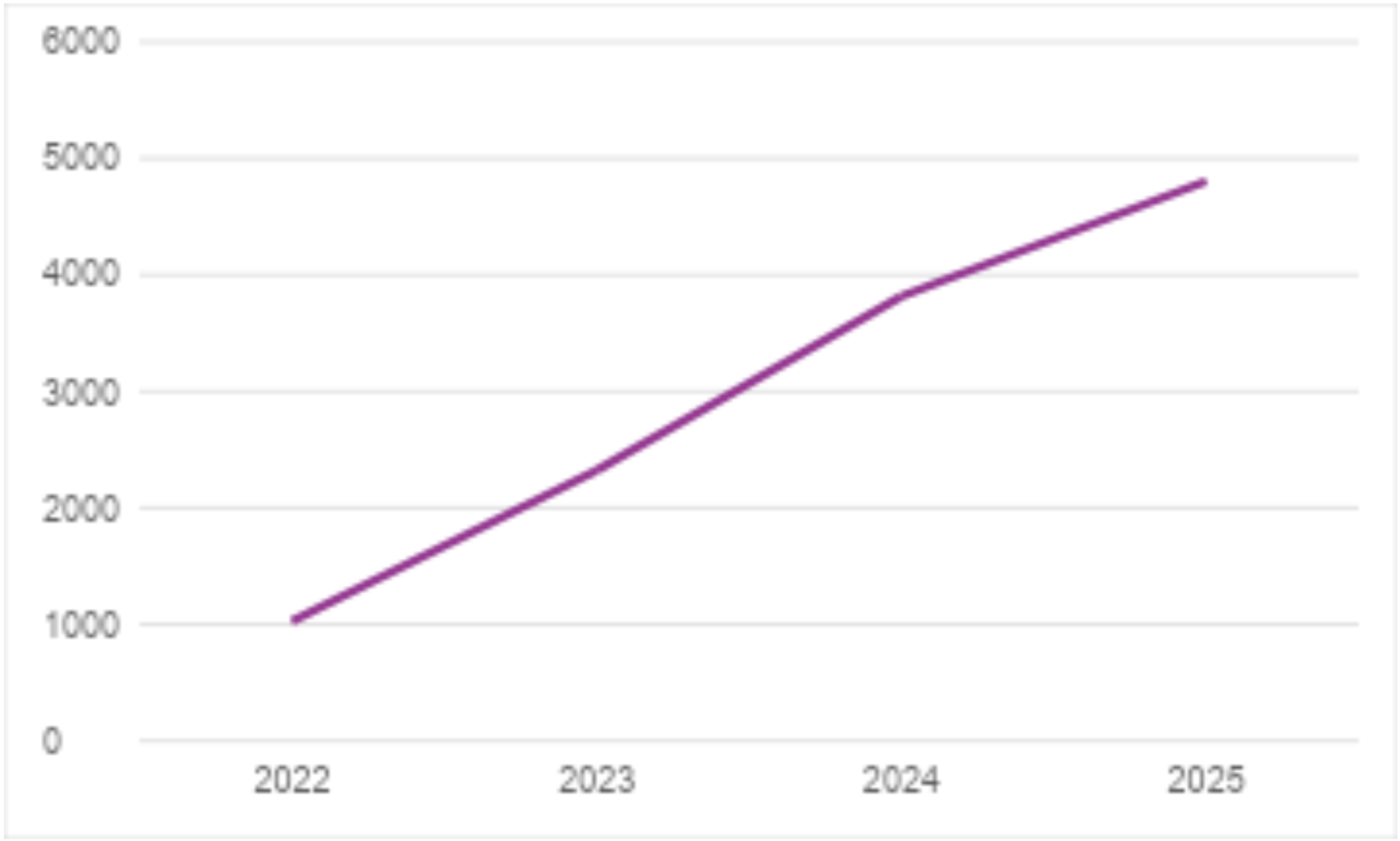
Number of visitors from Japan to Azerbaijan has been steadily increasing, with growth exceeding 60% in the first eight months of 2024 compared to the same period in 2023. A further 35.4% increase in visitor numbers was recorded in the first five months of 2025.
In 2025, the number of arrivals from Japan reached 4,804, representing a 59% increase from the previous year.
74% of Japanese travelers visit Azerbaijan for leisure and entertainment purposes, while 22% visit for business reasons.
The average Japanese tourist spends 2,206 AZN per trip in Azerbaijan.
Japanese tourists usually stay in Azerbaijan for 1–3 nights, or 4–5 nights if they wish to explore nearby regions.
The most visited regions by Japanese in Azerbaijan are Baku, Shaki, Gabala and Gusar.
Japanese travelers show a strong preference for cultural heritage, historical sites, unique city landscapes and nature. Vineyards & wineries, health/wellness also starting to draw more attention.
History and Culture: Historical places, historical buildings, museums, local markets, vineyards & wineries
Nature: national parks, mountains, sea, beaches.
Health, Wellness and Relaxation: Mineral & thermal springs (since hot springs ‘onsen’ are really loved in Japan), luxury spas and traditional hammams, traditional Tea Ceremony.
Leisure & Activities: Local shopping, visiting popular locations in the city, including major shopping malls, entertainment centers, and cafés
Gastronomy and Traditional cuisine: Exploring local food, traditional sweets, local wine. (availability of Japanese/Asian restaurants or ingredients in marts is also important for longer stay visitors)
According to JTB Japanese outbound tourism is expected to experience a steady recovery, with a forecasted 2.6% increase in international travelers to 15.5 million in 2026.
Outbound travel in Japan is recovering slower despite this, in 2024 there were 13 million travelers with growths to 15,5 million in 2025-2026, reaching nearly 90% of pre-pandemic levels.
Japan’s outbound tourism market is expected to grow rapidly between 2025 and 2035 as disposable income rises, travel restrictions are relaxed and interest in international experiences grows. In 2025, outbound tourism from Japan contributed to USD 8.514 Billion and is projected to reach USD 90.1 Billion by the end of 2035, increasing at a CAGR of 26.6%.
Trends, such as an increasing preference for cultural tourism, adventure travel, and experiential luxury, are also driving the growth of the market. Japanese tourists are also embracing sustainable tourism practices and eco-friendly travel options that impact the destination and travel package selected.
Despite the economic downturn, traveler spending is expected to rise by 6.6% to 273,000 yen per traveler during holiday periods.
The Japanese trade market primary operates in Japanese. While some major corporations are shifting to English and it’s used in international finance, legal, and major corporate sectors; still localized, high-level Japanese is required for marketing, compliance, and consumer trust. Translators or bilingual staff necessary for foreign entities.
LINE is the main app for initial and follow-up communications. Japanese business culture still places a very high value on face-to-face(F2F) meetings, prioritizing them for building trust, establishing rapport, and high-stakes decision-making. Japanese professionals often view online meetings as less productive and prefer in-person contact, when possible, particularly to build the trust which is done through personal interaction, exchanging business cards, in person check-ins, often before the actual business is discussed. In Japanese business what is not said is often as important as what is spoken. In-person meetings allow for reading body language, facial expressions, and atmospheric cues, which are vital for understanding true sentiment. LINE can be used for online communications and quick follow-ups.
Key market centers to visit include Tokyo which is Japan’s largest business market and primary hub for finance. Other major cities like Osaka (commercial, trade and industrial hub), Yokohama, Nagoya, Fukuoka, Kyoto (strong in tourism), Sapporo (Hokkaido).