Türkiye
country profile
Türkiye is one of Azerbaijan’s most strategic tourism partners, supported by strong bilateral relations and a well-established institutional cooperation framework.
Tourism collaboration is built on long-standing agreements, most recently updated in 2025, and is further reinforced through regular intergovernmental commissions and dedicated tourism working group meetings.
Cooperation extends across multiple areas, including joint marketing campaigns, B2B events, training programmes, and sectoral partnerships. Azerbaijan actively promotes its tourism offer in the Turkish market through targeted campaigns, media collaborations, and industry engagement initiatives.
In recent years, both countries have intensified collaboration in key segments such as MICE, winter tourism, and cultural tourism, alongside the development of joint tourism products and knowledge exchange programmes.
As a result of these coordinated efforts, Türkiye remains a high-volume, high-potential source market with consistent growth in visitor numbers and strong opportunities for further expansion.
Mid-term break: November 10–14 2026
Semester break: January 19–30 2026
Mid-term spring: March 16–20 2026
Summer holidays: June 26 2026
Eid al-Fitr: March 20–22 2026
Eid al-Adha: May 27–30 2026
January 1 – New Year’s Day
April 23 – National Sovereignty and Children’s Day
May 1 – Labour and Solidarity Day
May 19 – Commemoration of Atatürk, Youth and Sports Day
July 15 – Democracy and National Unity Day
August 30 – Victory Day
October 29 – Republic Day
Visitors from Türkiye represent a diverse and dynamic travel segment. The majority are aged between 25–45 and travel as couples, families, or small groups.
Short stays and repeat visits are common, driven by geographical proximity and frequent flight connections.
Turkish travellers typically combine leisure and lifestyle experiences, with growing interest in city breaks, gastronomy, shopping, and cultural exploration. Business travel and MICE-related visits also represent a significant share of the market.
Overall, the market is characterised by high travel frequency, flexible planning behaviour, and strong potential for repeat visitation.
• Comfort-Oriented Premium Travel: Turkish travelers show interest in high-quality hotels and upscale experiences, particularly in urban centers like Baku. While luxury is appreciated, demand is largely driven by comfort, service quality, and well-located accommodations rather than ultra-exclusive or niche luxury segments. Experiences such as fine dining, boutique hotels, and curated city tours are especially appealing.
• Family and Leisure-Oriented Holidays: Family travel remains a key segment, with demand for destinations offering safe environments, clean facilities, and a variety of leisure activities suitable for different age groups. Parks, promenades, and soft entertainment options are preferred over large-scale theme parks.
• Nature and Seasonal Experiences: There is growing interest in destinations that combine urban experiences with natural landscapes. Regions offering mountains, greenery, and seasonal activities—such as winter tourism (e.g., skiing in Shahdag or Tufandag) —are increasingly attractive, particularly for short escapes.
• Wellness and Relaxation: Spa facilities, thermal experiences, and relaxation-focused stays are valued as complementary elements of travel. Wellness is typically integrated into broader leisure trips rather than being the primary travel motivation.
• City Breaks and Short Escapes: City tourism is a primary driver, with strong demand for short-term visits to vibrant destinations like Baku. Key interests include cultural landmarks, waterfront areas, shopping malls, dining experiences, and a dynamic urban atmosphere.
• Cultural Affinity and Ease of Integration: Turkish travelers demonstrate a strong preference for destinations with cultural, historical, and linguistic similarities. Azerbaijan stands out as a highly attractive destination due to shared heritage, familiar customs, and minimal language barriers, ensuring a seamless travel experience.
• Quality-Driven Accommodation Choices: The market shows a clear inclination toward comfortable, well-rated 4- and 5-star hotels. While luxury is appreciated, the primary driver is value-for-money combined with quality service standards rather than exclusivity alone.
• Retail and Shopping Opportunities: Shopping constitutes an important component of the travel experience. Visitors are particularly interested in a mix of modern retail (shopping malls, international brands) and authentic local products such as handicrafts, carpets, and regional specialties.
• Family and Couples-Oriented Travel Patterns: Turkish outbound travelers commonly travel as families or couples. As such, they prioritize destinations offering a balanced mix of leisure, entertainment, and family-friendly infrastructure.
• Safety, Convenience, and Accessibility: Destinations that provide a high level of safety, cleanliness, and ease of mobility are strongly preferred. Visa-free travel, short flight duration, and well-organized tourism services significantly enhance Azerbaijan’s appeal.
• Short-Stay and Seasonal Travel Behavior: The market is characterized by a tendency toward short breaks and weekend getaways. Travel demand peaks during public holidays and shoulder seasons (spring and autumn), when weather conditions are mild and suitable for city exploration.
• Culinary Diversity and Familiarity: Gastronomy plays a key role in destination choice. Turkish travelers value access to Azerbaijani cuisine, while also appreciating the availability of Turkish and international dining options, combining familiarity with new culinary experiences.
The average spending of Turkish travelers abroad is moderate to mid-high, reflecting a strong emphasis on value-for-money rather than purely luxury-driven expenditure. Compared to high-spending markets such as GCC countries, Turkish tourists tend to manage their budgets more carefully while still allocating significant spend to key experience components.
On average, a Turkish traveler spends approximately $600 to $1,500 per trip, depending on the duration of stay, travel style, and seasonality. Expenditure is primarily concentrated on accommodation, dining, shopping, and local experiences.
Shopping—particularly for local products and accessible international brands—along with food and beverage experiences, represents a notable share of total spending. While luxury purchases are less dominant, there is a growing segment of travelers willing to spend more on premium hotels, curated experiences, and high-quality services, especially for short city breaks or special occasions.
Overall, spending patterns indicate a balanced profile, combining affordability with selective premium consumption.
Turkish travellers rely heavily on digital channels when planning their trips. The main sources of information include:
•Social media platforms (Instagram, TikTok, YouTube)
•Online travel agencies (OTAs) and booking platforms
•Airline websites
•Travel blogs and influencer content
•Recommendations from friends and family
•Travel agencies
Social media and word-of-mouth play a particularly strong role in destination discovery and decision-making, while online platforms are primarily used for booking and price comparison.
Travel planning among Turkish visitors is typically short-term and highly flexible.
A significant share of bookings is made within 2–4 weeks prior to departure, while last-minute travel decisions are common, particularly for short-haul destinations such as Azerbaijan.
Demand is strongly influenced by public holidays and school breaks, which often trigger immediate booking behaviour. In addition, promotional fares, bundled offers, and airline availability play a decisive role in accelerating the decision-making process.
The visa-free regime and the ability to travel with a national ID card further support spontaneous travel, removing key barriers and enabling quick decision-making.
While early bookings are observed for peak periods such as summer and major holidays, the overall market remains price-sensitive and promotion-driven, with a strong tendency toward spontaneous travel planning.
•Online travel agencies (OTAs)
•Travel agencies (package tours)
•Direct bookings via airline websites
•Direct hotel bookings (online)
•Limited offline / face-to-face bookings
•Online travel agencies (OTAs): Etstur, TatilBudur, Obilet
•Global platforms: Booking.com, Airbnb, Hotels.com
•Airline direct channels
•Travel agencies and tour operators
Digital channels dominate the distribution landscape, with a strong preference for mobile-based booking solutions.
The average length of stay is between 3–5 days.
Short city breaks typically last 2–4 nights, while longer stays (5–7 days) are more common for combined leisure and nature-based trips.
Family travellers tend to stay longer, often combining urban experiences with shopping and nearby regional attractions.
•Etstur
•TatilBudur
•Jolly Tur
•Prontotour
•Setur
•Obilet
etc.
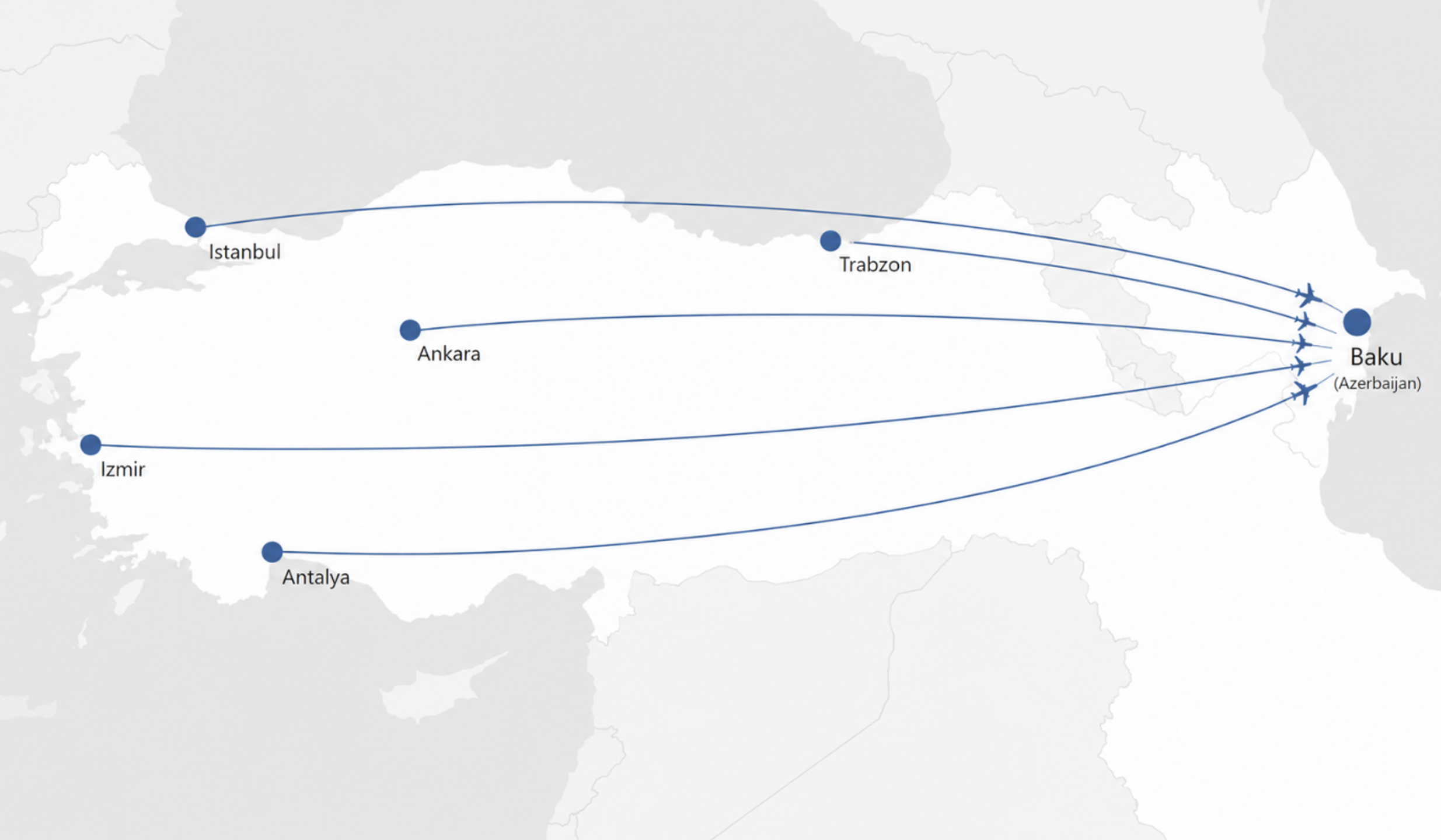
Air connectivity between Turkey and Azerbaijan is strong and well-developed.
Direct flights operate from major cities including Istanbul, Ankara, Antalya, Izmir, and Trabzon to Baku.
Multiple airlines provide frequent connections, ensuring flexibility and convenience for travellers.
On average, more than 100 weekly flights operate between the two countries, supporting both leisure and business travel demand.
•EMITT – East Mediterranean International Tourism & Travel Exhibition (February, Istanbul)
•Ace of MICE Exhibition (January, Istanbul)
•Uzakrota Travel Summit (November, Istanbul)
•Travel Türkiye Izmir (December, Izmir)
etc.
Statistics
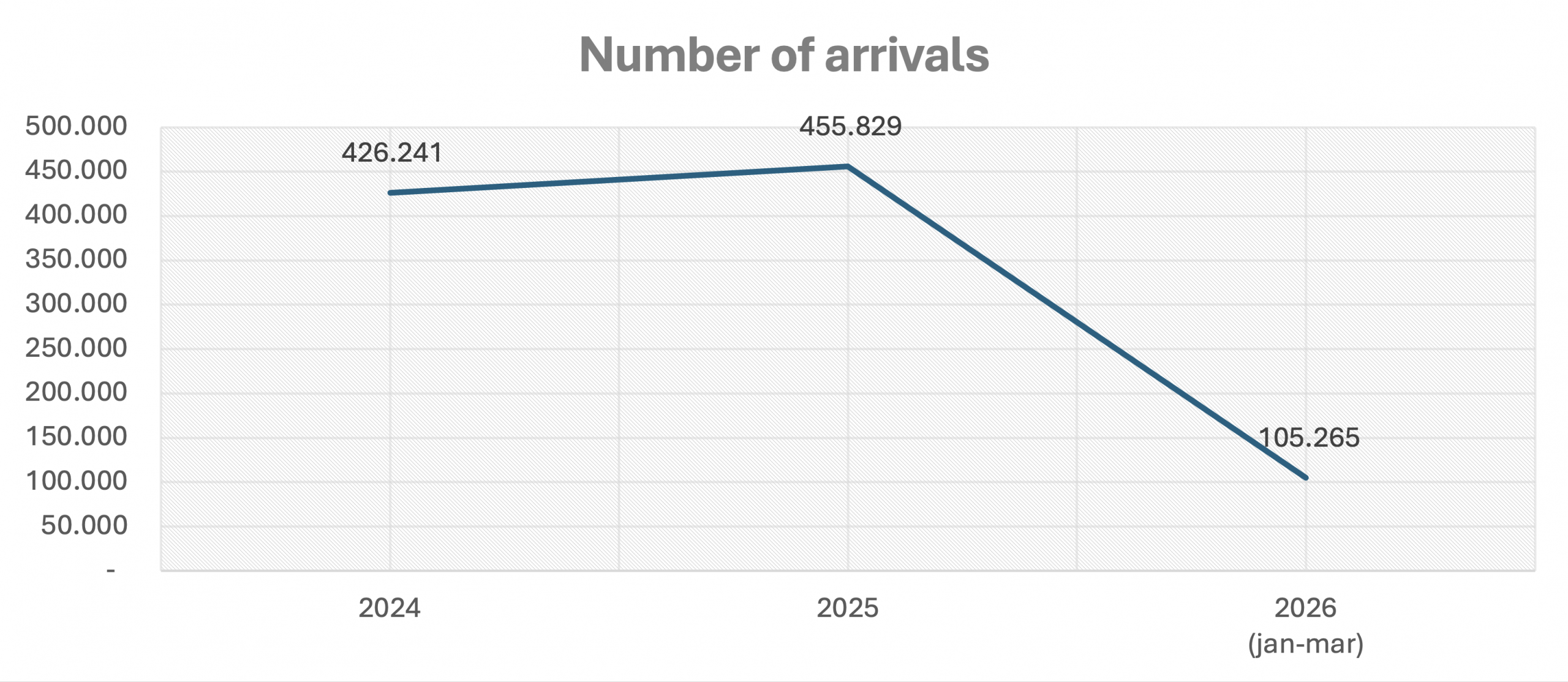
Türkiye remains a steadily growing source market for Azerbaijan, with consistent year-on-year increases in visitor numbers.
In 2024, arrivals reached 426,241, marking a 12.7% increase compared to 2023. Growth continued in 2025 at a more moderate pace of 6.9%, indicating market stabilisation following a strong recovery period.
In January–March 2026, arrivals increased by 13.5% compared to the same period of the previous year, reflecting renewed acceleration in demand.
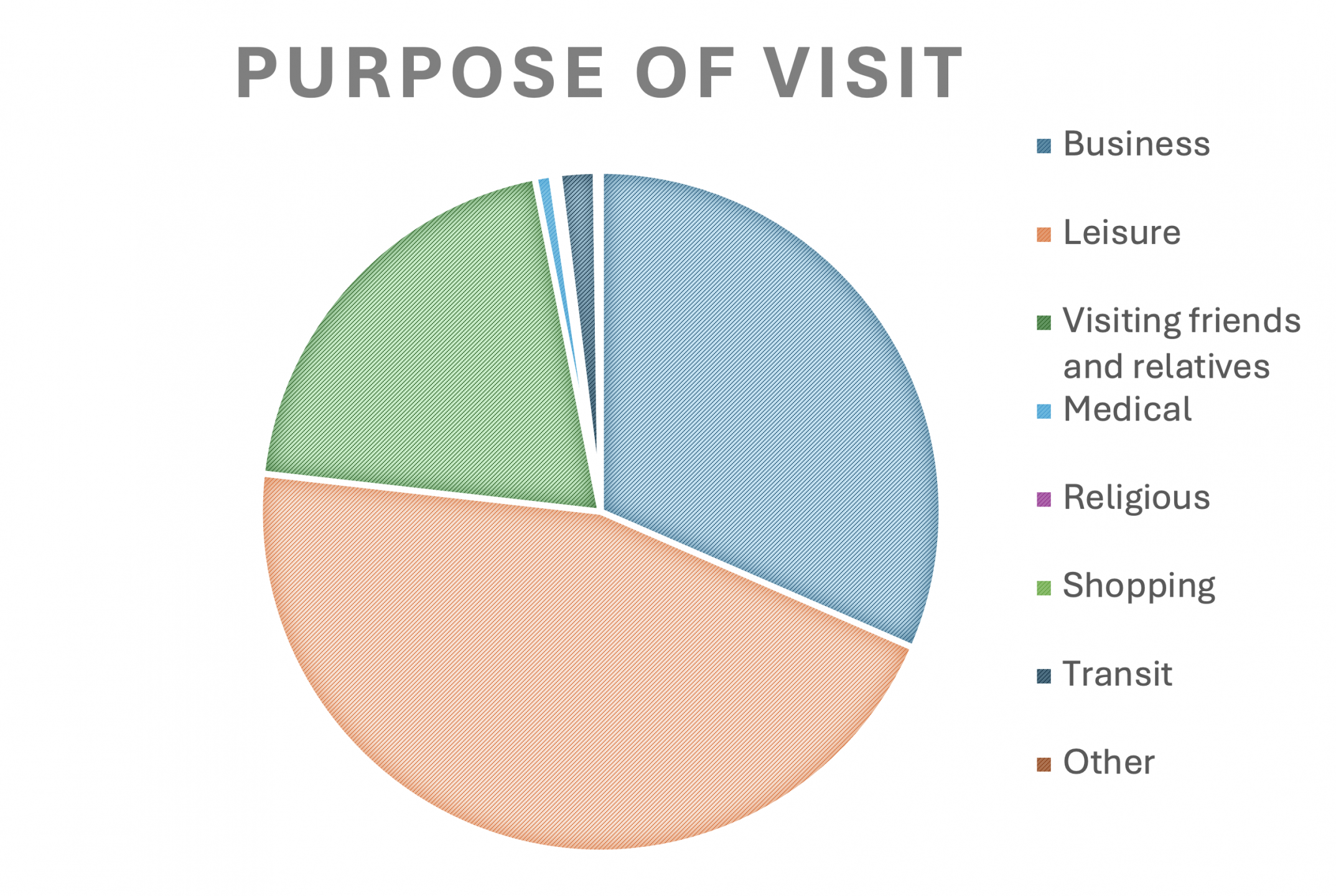
In 2025 ,by purpose of tourism 217,472 tourists from Türkiye visited Azerbaijan. The majority travelled for leisure, attracted by Azerbaijan’s cultural heritage, vibrant cities, and scenic natural landscapes.
Convenient travel conditions, including frequent direct flights and a visa-free regime, further support leisure travel and spontaneous trips.
Business and MICE travel also represent a growing share of visits, reflecting the strengthening economic and institutional ties between the two countries.
Overall, leisure remains the primary motivation, while Azerbaijan’s accessibility and diverse offerings continue to draw both repeat visitors and new travellers from Turkey.
The average Turkish tourist spends approximately 1,617 AZN per trip to Azerbaijan.
The main expenditure categories are:
•Transport: 42% of the budget
•Accommodation: 20%
•Food & Dining: 21%
•Other activities (shopping, attractions, leisure): 18%
Transport and accommodation dominate the spending profile, while dining and leisure experiences represent a growing share as travellers increasingly seek city breaks, cultural experiences, and gastronomic activities.
In 2025, the majority of Turkish visitors to Azerbaijan opted for short stays, with 43% staying between 1–3 nights. A significant portion of travellers also chose medium-length trips: 33% stayed for 4–7 nights, often combining city experiences with regional excursions.
Longer stays of more than 8 nights were less common, accounting for 20% of visitors, typically among those combining leisure with extended exploration of cultural and nature destinations.
The most visited regions by Turkish travellers in Azerbaijan are Baku, Guba, Ganja, Gusar and Gabala
Baku attracts those interested in urban experiences, shopping, and cultural heritage, while Gabala and Gusar appeal to nature and adventure enthusiasts. Guba and Ganja are popular for cultural sightseeing, traditional architecture, and regional cuisine.
Turkish visitors value nature, cultural heritage, and hospitality, as well as authentic Azerbaijani cuisine.
Azerbaijan is particularly attractive for families and travellers seeking halal-friendly and culturally considerate experiences, accommodating dietary, religious, and social preferences.
Leisure activities often include a mix of city exploration, nature excursions, and culinary experiences, with flexibility in short or medium-length stays.
Türkiye's outbound tourism market continues to grow steadily, with strong interest in nearby and regional destinations. Turkish travellers are increasingly seeking a mix of short-haul city breaks, cultural trips, and nature-based experiences. Popular destinations include Azerbaijan, Georgia, and the UAE, with a growing trend toward longer, multi-destination trips.
Turkish travellers show a preference for flexible, spontaneous travel, often booking 2-4 weeks in advance, while school holidays and public holidays drive peak demand. The market demonstrates strong potential for destinations offering cultural authenticity, family-friendly options, and convenient travel logistics.
• Relationship Management: Building strong partnerships with tour operators, travel agencies, and online platforms is crucial.
• Best Timing for Engagement: The ideal period for business outreach is from late January to June, ahead of the summer peak season.
• Preferred Communication: Face-to-face meetings remain highly valued; digital calls via Zoom are increasingly accepted. Turkish operators often make last-minute adjustments, so flexibility is essential.
• Key Market Centres: Focus on Istanbul, Ankara, Izmir, and Antalya, which are primary hubs for outbound travel planning and trade activity.